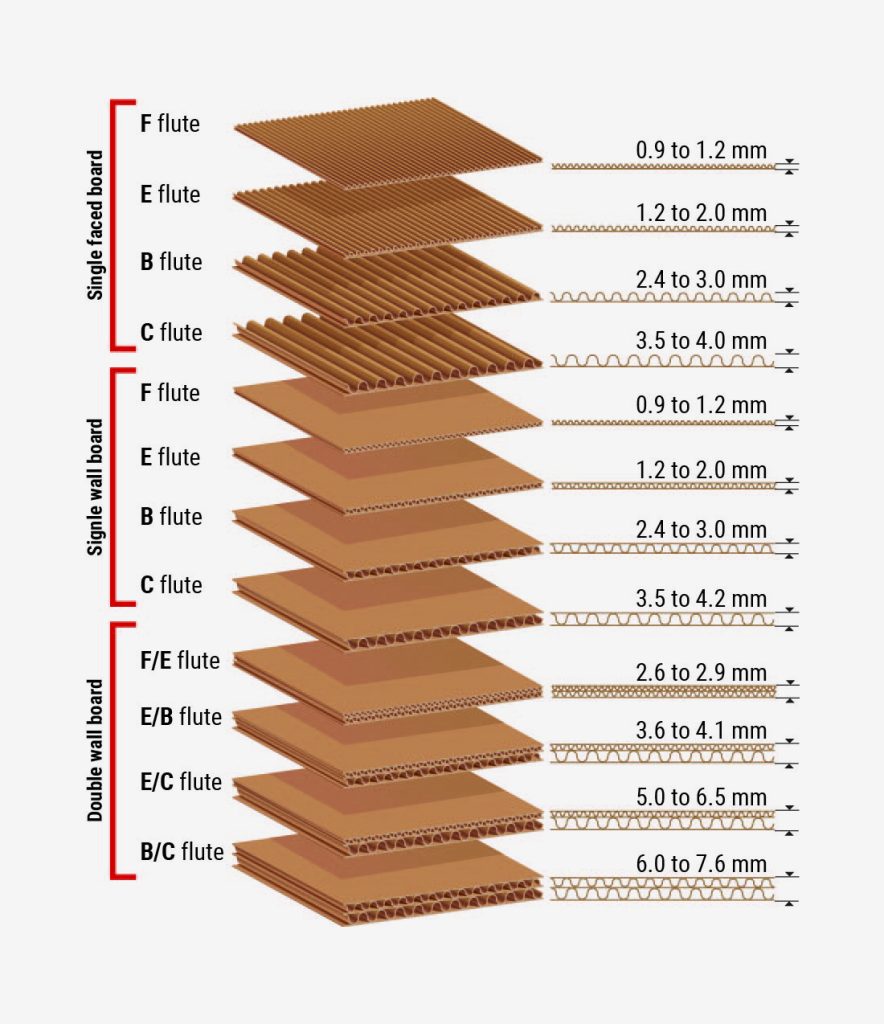
Fluted Board:
- Single Wall Fluted Board: Made of one layer of fluting between two liners. This is the most common type used for lightweight packaging and is suitable for items that require basic protection.
- Double Wall Fluted Board: Features two layers of fluting between three liners, offering extra strength and protection. It’s ideal for heavier items or for products that need added cushioning during transportation.
- Triple Wall Fluted Board: The strongest of the fluted boards, with three layers of fluting and four liners. It’s used for very heavy-duty packaging, such as for large machinery or fragile items.
Flute Types, Sizes, and Thicknesses:
Flutes refer to the wave-like structures inside the board. Different flute types offer various levels of protection and strength. The most common flute sizes are:
- A-Flute:
- Size: The largest flute size.
- Thickness: Typically 4mm to 5mm.
- Uses: Provides excellent cushioning and strength, ideal for packaging fragile or heavy items.
- B-Flute:
- Size: Smaller than A-flute.
- Thickness: Around 3mm to 4mm.
- Uses: Provides good strength and crush resistance, used for lighter-duty packaging that still needs cushioning.
- C-Flute:
- Size: Mid-size, commonly used.
- Thickness: About 3.5mm to 4mm.
- Uses: A good balance of strength and cushioning, perfect for everyday packaging applications.
- E-Flute:
- Size: Smaller than C-flute.
- Thickness: Typically 1.5mm to 2mm.
- Uses: Ideal for retail packaging and lightweight products that require a smooth surface for printing.
- F-Flute:
- Size: The smallest flute size.
- Thickness: Around 1mm to 1.5mm.
- Uses: Provides a crisp appearance and minimal bulk, perfect for small and lightweight packaging that needs a high-quality print finish.
Solid Bleached Sulfate board
SBS :
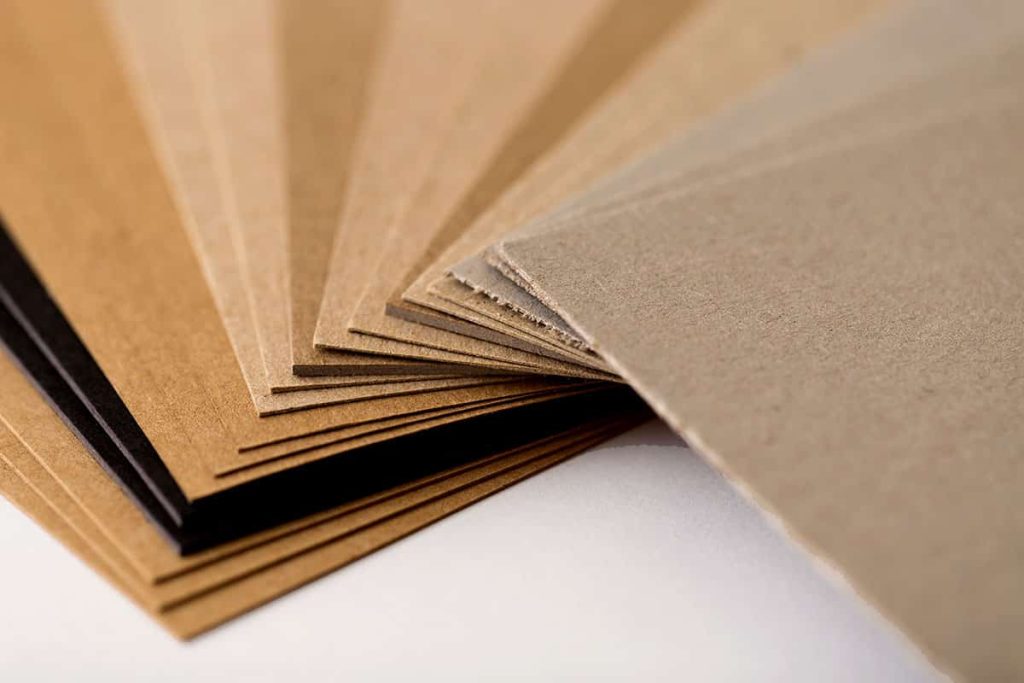
A high-quality paperboard made from bleached virgin wood pulp. It has a smooth, white surface on both sides, making it ideal for premium packaging and high-quality printing. Commonly used for food, cosmetics, and luxury product packaging.
Val Coat:
A paperboard with a white surface on one side and grey on the other. The white side allows for good printing, while the grey side provides strength and durability. It’s used for food packaging, beverage cartons, and retail packaging.
Val Kraft:
Made from unbleached kraft pulp, Val Kraft has a natural brown appearance and offers strong tear resistance. It’s commonly used for eco-friendly, heavy-duty packaging like shipping boxes and corrugated containers.
Foam
Foam is used in packaging to provide cushioning and shock absorption, protecting delicate items from damage during shipping. It’s lightweight, cost-effective, and customizable to fit products, ensuring a secure fit. Foam also helps prevent static damage to electronics and can offer temperature insulation for sensitive goods.
JMPX Foam: This foam is a high-density material that provides superior protection for products during shipping and handling. It’s commonly used in packaging sensitive equipment or fragile items due to its excellent shock absorption and cushioning properties. JMPX foam is also durable, offering reliable protection over long periods.
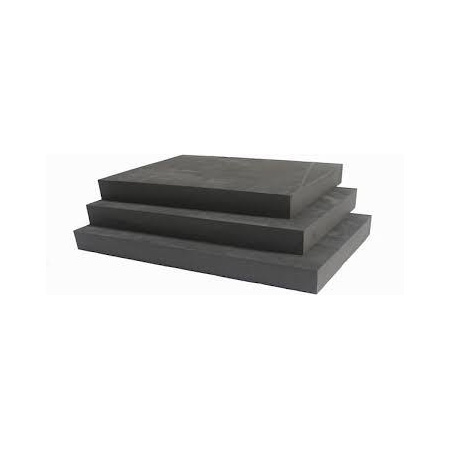
Airothine Foam: Airothine is a lightweight yet durable foam that is commonly used in packaging applications. It’s known for its ability to absorb impacts and provide a cushioned environment for products. Airothine foam is often used for electronics, delicate items, and high-end consumer goods due to its protective qualities and ability to maintain its structure under stress.
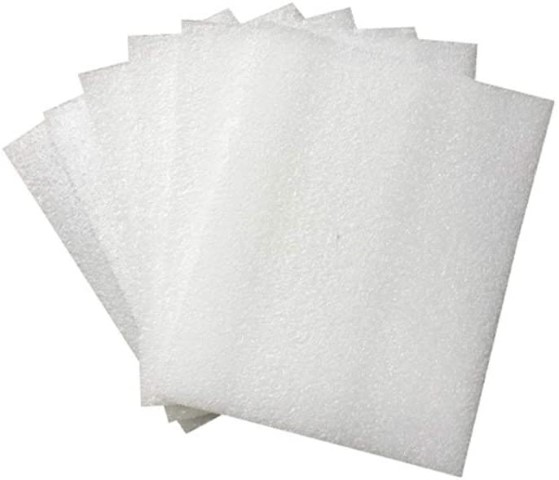
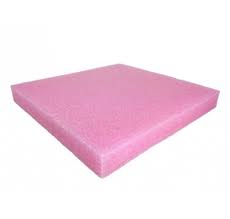
Non-Electric Foam: Non-electric foam refers to foam materials that do not generate static electricity, making them ideal for sensitive electronic components. This type of foam is designed to prevent static discharge, which can damage electrical components. It’s often used in packaging for computer parts, circuit boards, and other electronics where static control is crucial.
Branding Styles
Digital Printing: Digital printing is a modern technique that uses digital files to print images directly onto packaging materials. It’s ideal for short runs, personalized designs, or high-quality images, offering quick turnaround times. Digital printing allows for flexibility and high resolution, making it perfect for intricate designs and variable data printing.
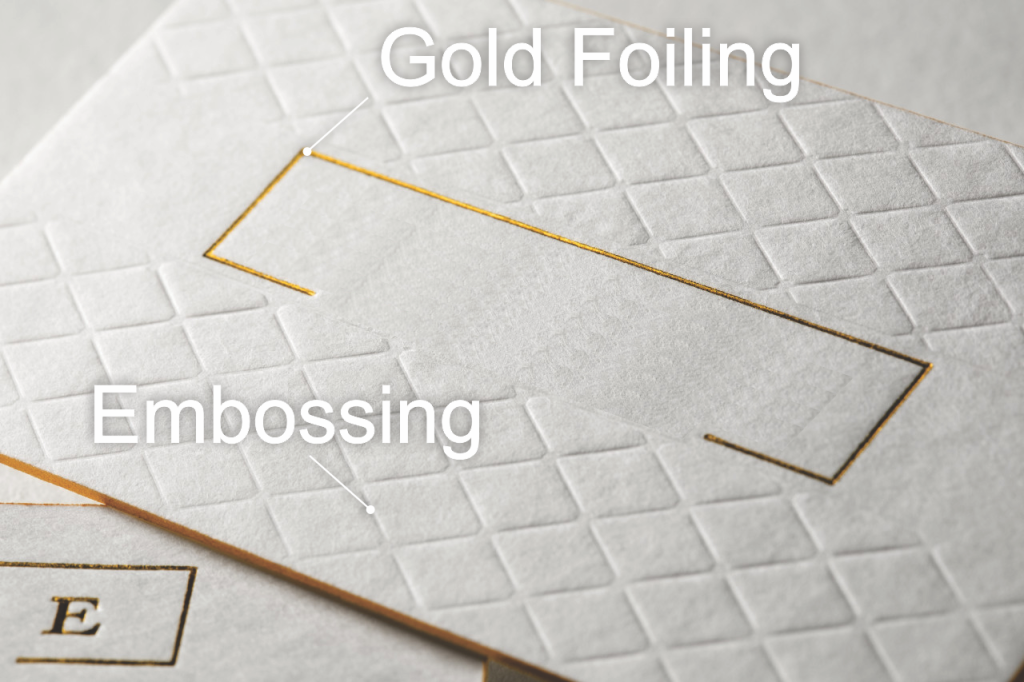
Foiling: Foiling is a special printing technique that uses metallic or colored foil to create shiny, reflective details on packaging. This process involves applying heat to a metallic foil, which adheres to specific areas of the design. Foiling adds luxury and elegance to packaging, often used for logos, text, or decorative accents.
Embossing: Embossing is a technique that raises specific areas of the packaging material, creating a three-dimensional effect. It is often used to enhance the visual appeal of a logo, text, or design by making them stand out. Embossing adds texture and a tactile element to packaging, providing a premium feel.
Silkscreen Printing: Silkscreen printing (or screen printing) involves applying ink onto a surface through a mesh screen, allowing for vibrant, long-lasting colors. It’s commonly used for printing on a variety of materials like paper, plastic, or fabric. This method is particularly effective for large designs, solid colors, and logos, making it ideal for packaging products like clothing or food items.
What Is A Die Trace
A die track (or die line) is a template used in packaging design to show the shape and dimensions of a product’s packaging, such as a box, label, or bag. It outlines where cuts, folds, creases, and perforations should occur during the manufacturing process.
The die track is created using a cutting die, a tool with sharp edges that cuts the packaging material into the desired shape. This ensures that the final product fits together properly and is aligned correctly. The die track also indicates areas for printing, embossing, and other finishing processes.
In packaging design, the die track serves as a guide for both the design and the production teams to ensure the packaging will be produced accurately and efficiently.